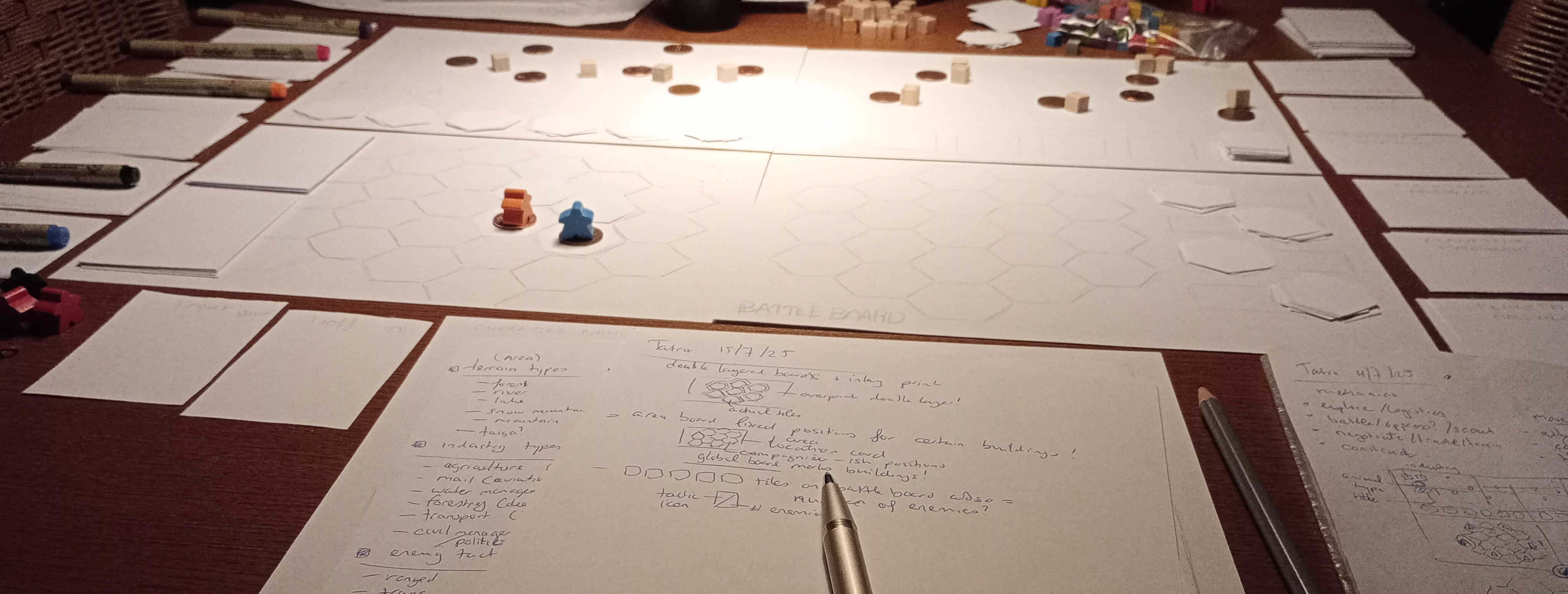
Dark Fantasy strategy game set in the Tatra mountains in Poland and Slovakia.
Solo- and semi-cooperative (possibly competitive) board game taking place in the Tatra mountain range where players recruit animals to try to regain control over the Tatra mountains through fighting battles, forming alliances, developing industries and building constructions.
Inspired by solo campaign and open world games, I wanted to design a game that doesn't feature dice rolling to determine battle outcomes, has a believable open world that still varies and a plethora of playing styles to play and adapt to.
back to homepage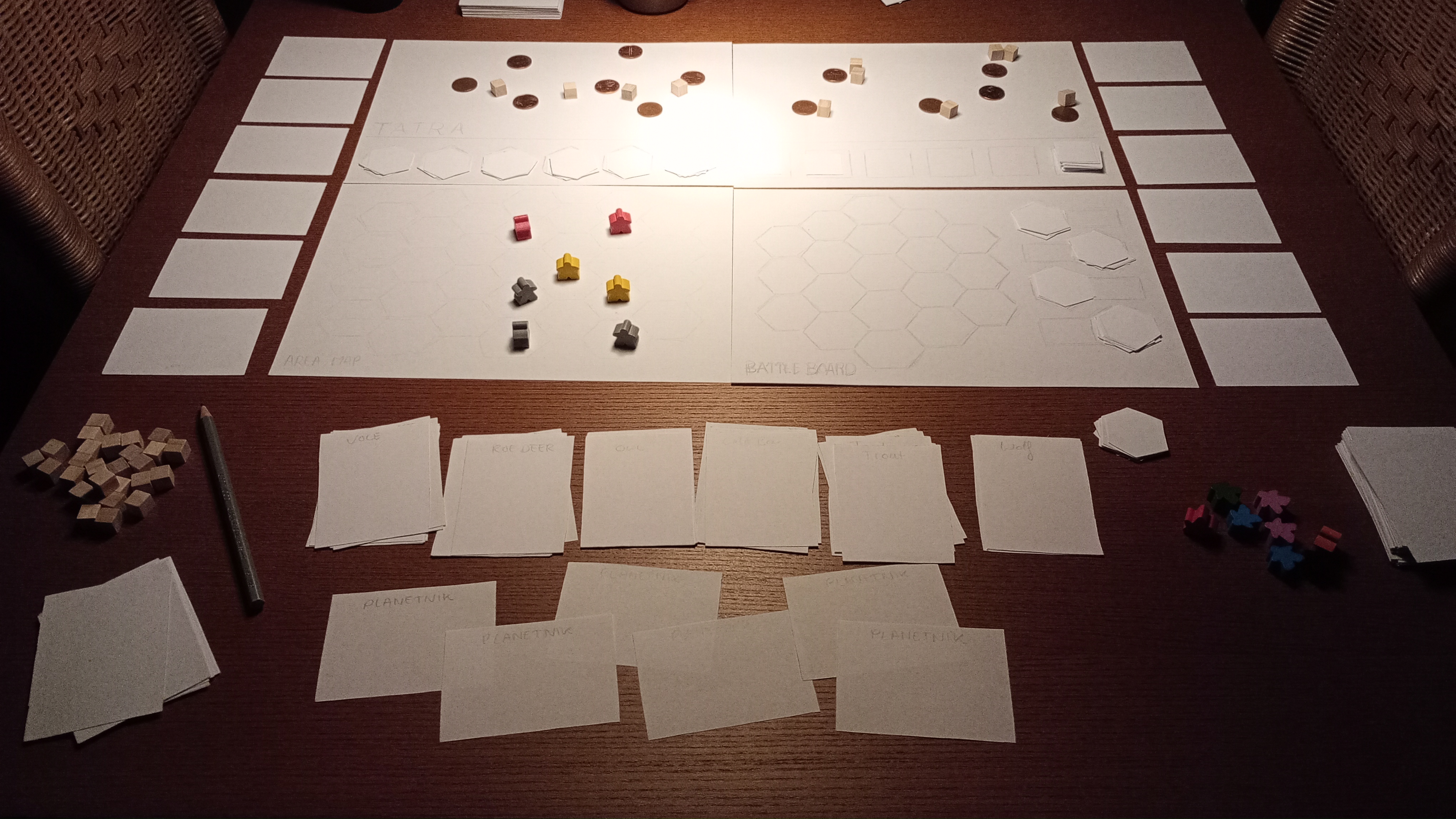
Early game design sketched on paper with loads of text. Global (top), area (bottom right) and local (bottom left) boards became Tatra, Area and Battle/Alliance boards. Heavy reliance on placing hexagonal terrain tiles.
The mythical lore of the Tatras is very regional and mythical beings often have different names or can have different forms between regions. I made a selection of the most common and (for this game) useful mythical beings, trying to maintain their form.
The animals chosen are the most common and unique to the tatras, also keeping in mind their rarity; voles, foxes, boar and roe deer are incredible common, where a lynx or bear or chamois is a (very) rare beast to come across.
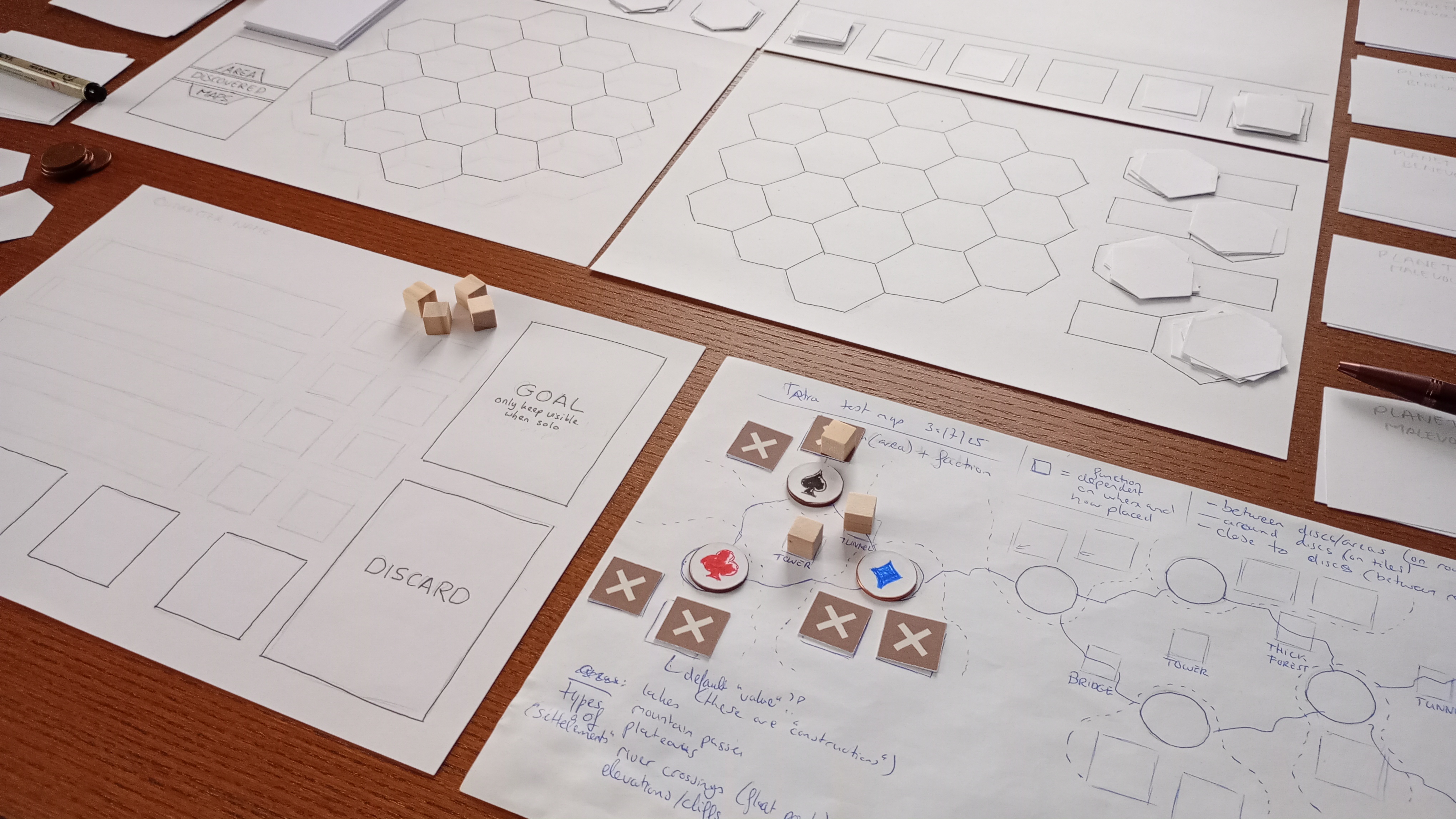
Determining the layout of the player board (left) and mountain range design (right); cubes representing constructions, tiles as industries, and dominant (enemy) factions for that location, now represented by simple card suits.
The game was originally designed to have anthropomorphic animals with ranks, mostly with a military or noble background. Since Slovakia didn't really have much on nobility and I didn't want the game to feel too militarian, I decided to drop this and go with fictional animal factions instead.
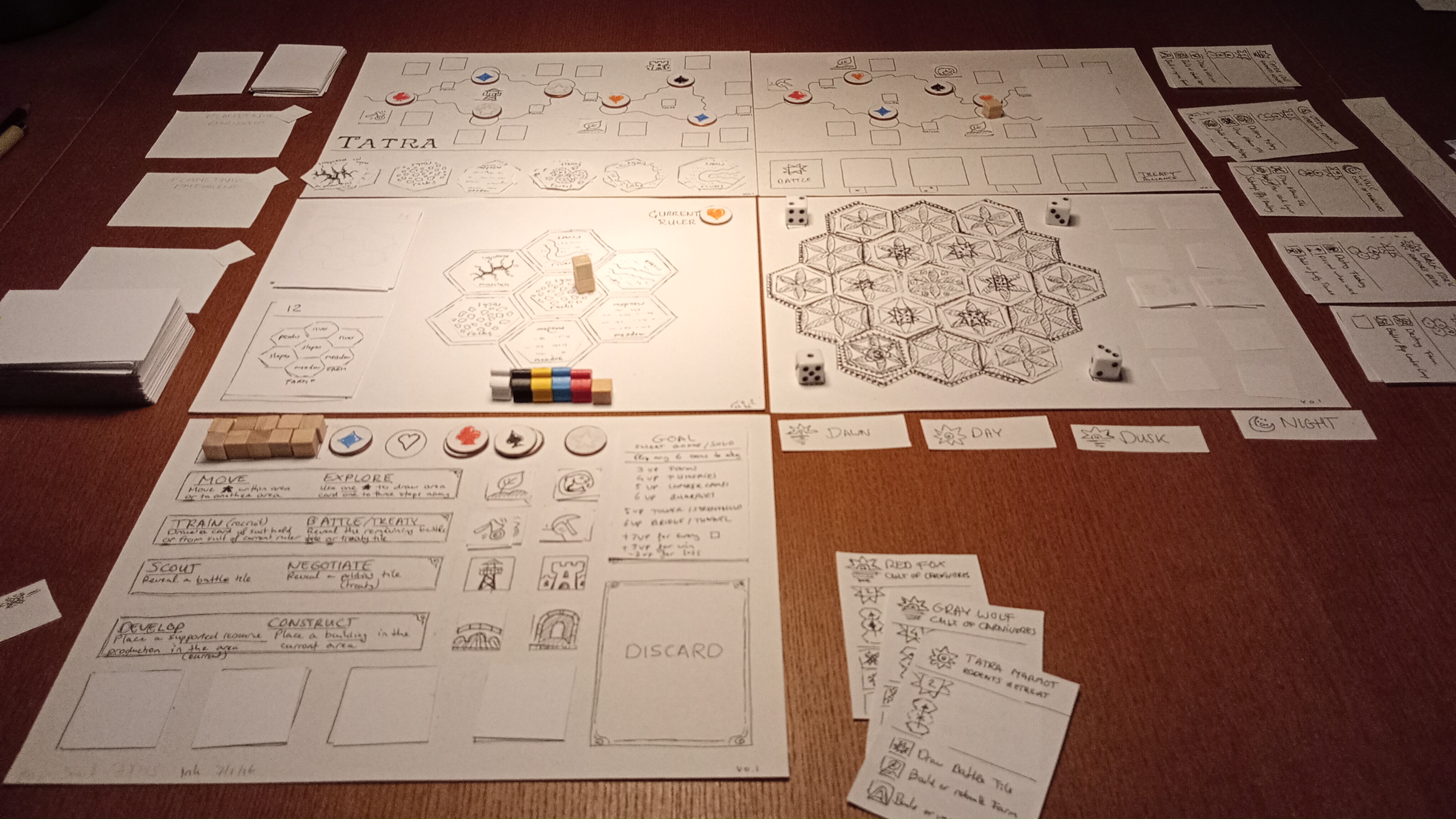
Smaller area board (middle left) as it was quickly annoying to lay out all the different terrain tiles on the map cards (left). This version also showed the shortcoming of the battle and alliance mechanics (middle right).
Each animal has realistic traits and abilities. Rodents can build tunnels, large animals are powerful in battle, some can scout enemy areas while smarter animals have advantages in forming alliances.
All animals have to be played at the time of day they are in reality active; dawn, day, dusk and night, where crepuscular animals can be active during either dawn or dusk.
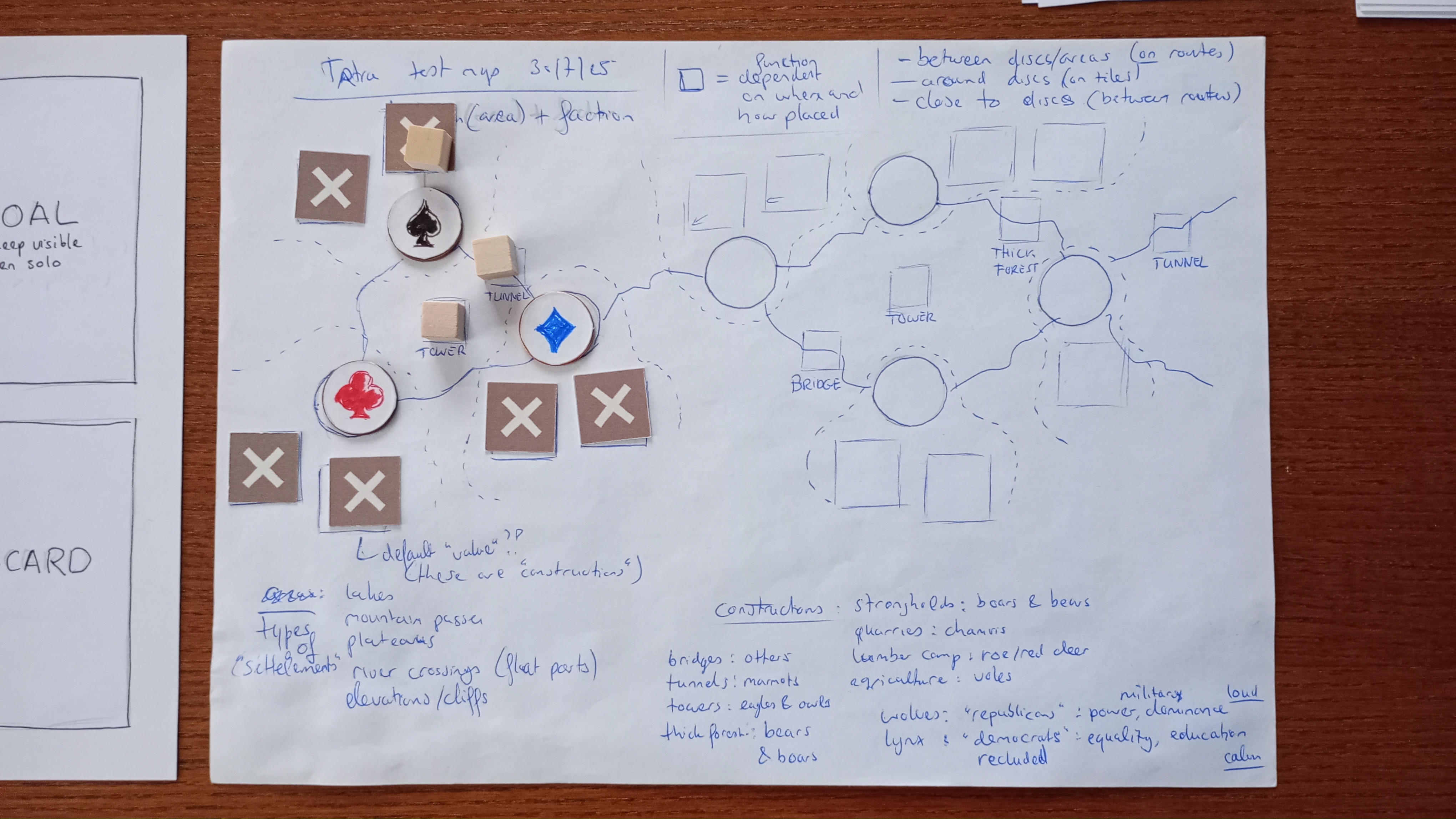
Preparing the game board, cubes that represent constructions on their location on the board, tiles that correspond to industries, and dominant (enemy) factions for that location, now represented by simple card suits.
This mechanic of having explorable areas (bottom left above) felt out of place and took a lot of time; every time you moved to another area you had to place seven tiles of the terrain type on that area's map card. So this mechanic was dropped after the first print (below).
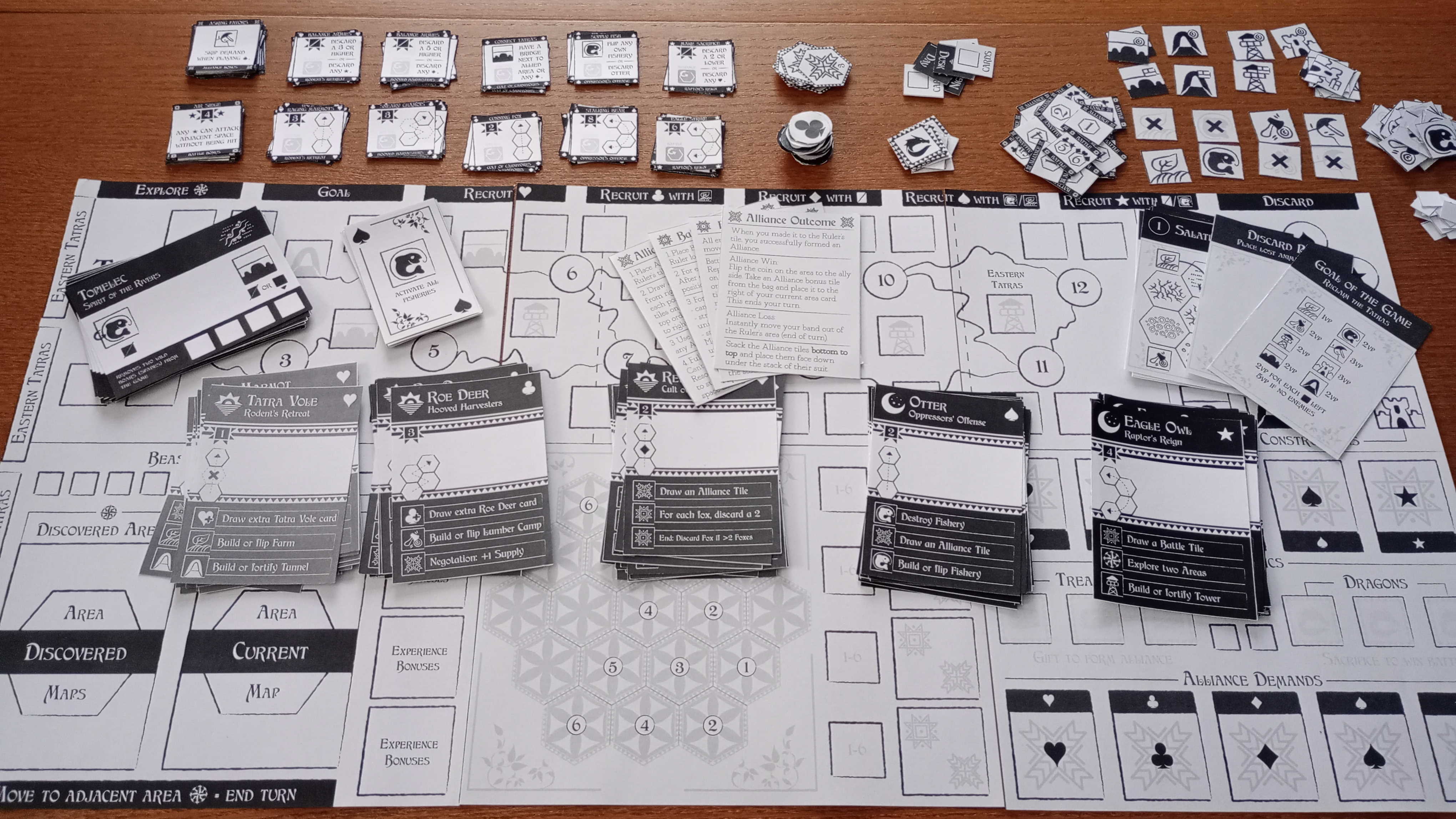
The main mechanic of the game is battling and forming alliances. This is done through drawing tiles (top left) and moving on the hexagonal Battle/Alliance board (middle bottom). Every animal suit has their own set of moves.
To make the game as little luck prone as possible, there are no die rolls deciding combat. Everything is decided through the Battle and Alliance tiles, a small ruleset and position tiles to be randomly drawn. All of these can be mitigated through Scout and Negotiation actions on some animal cards.